Blog / August 2026
Best Olive Oil in Saudi Arabia: Al Jouf, Imports, and What to Buy
Saudi Arabia is one of the few Gulf countries with a serious answer to 'why not grow it ourselves?' The Al Jouf region in the north has become a genuine olive-oil powerhouse — millions of trees, modern mills, and international medals. So the Saudi question isn't just which import to buy; it's how local, regional, and single-origin oils actually compare.
The three shelves in a Saudi supermarket
- Saudi-grown — Al Jouf oils and other local producers. Genuinely fresh (short journey, recent harvest) and worth trying; quality varies by producer, so the shelf test below still applies.
- Regional and international brands — Levantine, Turkish, North African, and the big European blends. Familiar and widely promoted; the blends share the usual weakness of bulk sourcing across seasons and countries.
- Single-origin imports — one named farm or grove, harvest-dated. The smallest shelf and the only one with full traceability.
The shelf test (works on every bottle)
Harvest date printed, not just best-before. A named origin — and the more specific, the better: 'product of Tunisia' is good, a named village and grove is better, 'blend of EU and non-EU oils' is a shrug. 'Cold extracted' stated plainly. Dark glass or tin. And a price that makes sense: hand-picking and same-day cold extraction cannot be sold at bulk-blend prices, in Riyadh or anywhere else.
What it costs in KSA
As of mid-2026: mainstream blends around SAR 20–45 per 750 ml–1 L; good Al Jouf and regional extra virgins roughly SAR 40–90 per 750 ml, with award-winning local bottlings above that; imported single-origin, harvest-dated oils typically SAR 70–120 per 500 ml. Prices move with harvests and promotions — the point is the shape: traceability is what the premium buys.
Where a Tunisian single-grove fits
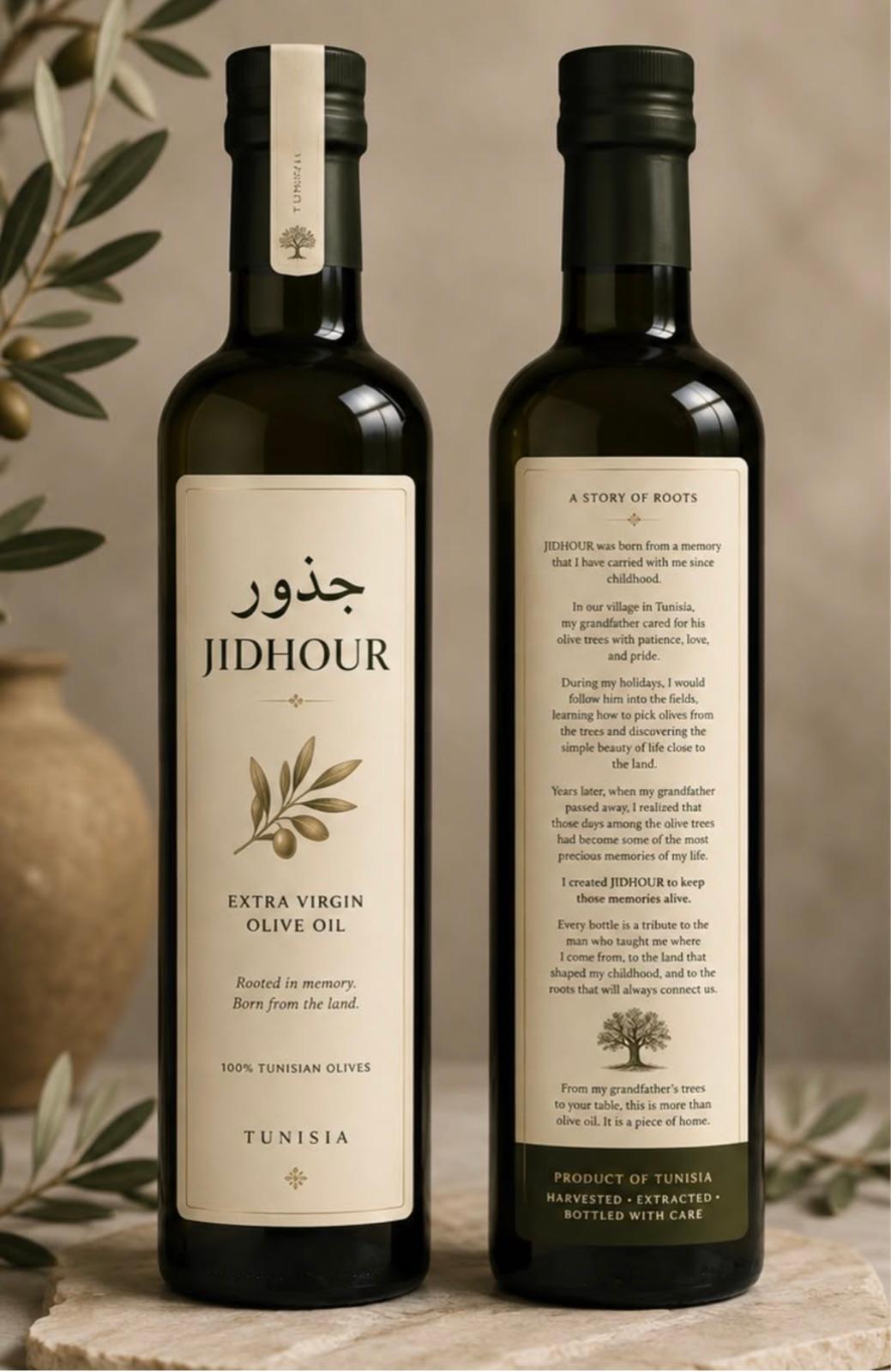
Tunisia and Al Jouf share more than climate — the same arid stress that concentrates flavour, and the same underdog story next to the famous European labels. JIDHOUR is our family's answer from the Tunisian side: one grove, one November harvest, cold-extracted within hours, the story printed on the back of every bottle. We ship to Saudi Arabia with free delivery over larger orders, priced in dollars or dirhams at checkout. If you already love a good Al Jouf oil, consider us the away fixture: same freshness principles, different terroir, and a taste of what the bulk tankers have been quietly exporting from Tunisia for decades.
The Gulf doesn't lack good olive oil. It lacks labels that tell the truth about where the oil grew — reward the ones that do.
Buy fresh, buy traceable, store it dark and cool, and split your kitchen into a cooking bottle and a finishing bottle. Your hummus will report the difference immediately.
Taste what the blog is talking about — single-grove Tunisian extra virgin, cold-extracted within hours of harvest.
Shop the 500 ml bottleKeep reading
Best Olive Oil in the UAE (2026): An Honest Buyer's Guide
What actually separates the olive oils on UAE shelves — harvest dates, origin lines, cold extraction — plus realistic Dubai prices, when a supermarket bottle is fine, and when it's worth ordering single-origin.
ReadHow to Store Olive Oil So It Stays Alive
Olive oil has four enemies: light, heat, air, and time. Where to keep the bottle, how long an opened bottle really lasts, why the stove-side cruet is a mistake — and what 'past its best' actually tastes like.
ReadHow to Choose a Good Olive Oil: A Label-Reading Guide
Most olive oil labels are designed to be skimmed. Here are the six things to actually check — harvest date, origin, extraction, bottle, grade, and price — and the red flags that mean you should put the bottle back.
Read