Blog / August 2026
How to Choose a Good Olive Oil: A Label-Reading Guide
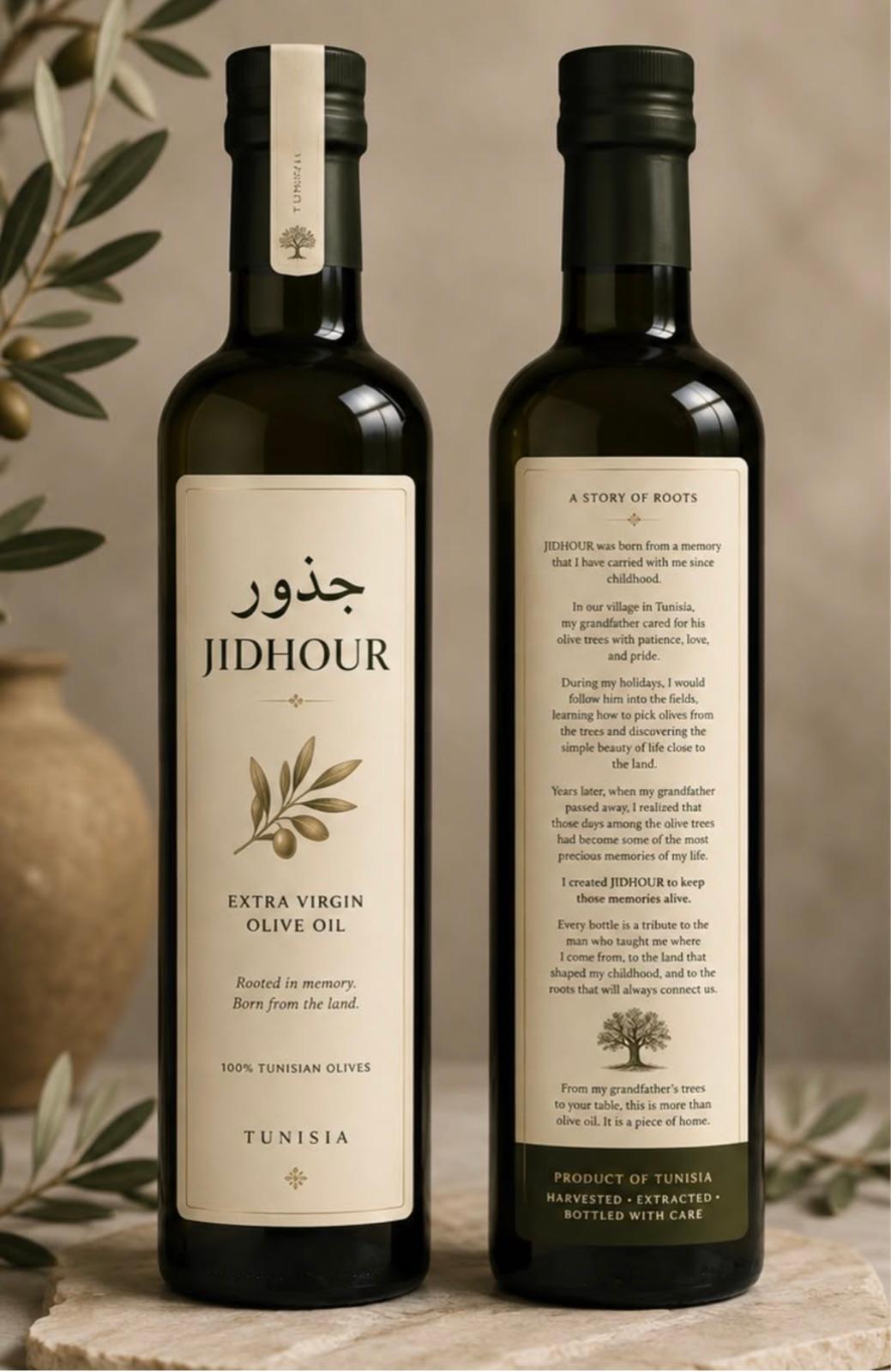
Stand in front of an olive oil shelf and every bottle says roughly the same thing: extra virgin, cold pressed, a Mediterranean landscape, an Italian-sounding name. Having grown up on oil that never saw a shelf, here is what we would actually check — in order.
1. Find the harvest date
Not the best-before date — the harvest date. Olive oil is fresh fruit juice; it peaks in its first year and fades from there. A producer proud of their harvest prints it plainly. If there is no harvest date anywhere on the bottle, that is your answer: the bottler either doesn't know or doesn't want you to.
2. Read the origin line — carefully
The legal origin text hides in the small print on the back. 'Blend of EU and non-EU olive oils' means olives from anywhere, blended in bulk, bottled under a flag of convenience. A single named country is better. A single named region, village, or grove is best — the shorter the supply chain, the harder it is to hide anything in it. (A large share of 'European' oil starts as Tunisian bulk exports; we wrote about that separately.)
3. Look for 'cold extracted'
Cold extraction (under 27°C) protects aroma and polyphenols at the cost of yield. Its absence from the label usually isn't an oversight. 'First cold press' means the same thing on modern equipment — the phrase survives from stone-mill days.
4. Check the bottle itself
- Dark glass or tin — light slowly bleaches oil into staleness. Clear glass is a marketing decision made at the oil's expense.
- A reasonable size — a huge bottle of good oil will be past its best before you finish it. Two smaller bottles beat one big one.
- A proper seal and a clean pour spout — details a careful bottler doesn't skip.
5. Understand the grade — and its limits
'Extra virgin' is the top legal grade: mechanically extracted, free acidity at or below 0.8%, no sensory defects. But the grade is tested at bottling, and a technically-passing oil can still be old, flat, and joyless. Treat the grade as the entry ticket, not the verdict. The harvest date, origin, and your own tasting settle the rest.
6. Be honest about price
Hand-picking, same-day cold extraction, dark glass, and small lots cost real money. Very cheap 'extra virgin' is not a bargain — it is a different product wearing the same words. You don't need to buy the most expensive bottle on the shelf; you need to buy from someone who can tell you exactly where the oil grew and when it was picked.
The best label is one that reads like a person answering questions, not a brand avoiding them.
Every JIDHOUR label answers all six: November 2025 harvest, one named grove in our Tunisian village, cold extracted within hours, dark glass, extra virgin at ≤0.8% acidity — and the story of the man who planted the trees on the back.
Taste what the blog is talking about — single-grove Tunisian extra virgin, cold-extracted within hours of harvest.
Shop the 500 ml bottleKeep reading
Best Olive Oil in Saudi Arabia: Al Jouf, Imports, and What to Buy
Saudi Arabia grows world-class olive oil in Al Jouf and imports everything else. How Saudi-grown, regional, and single-origin oils compare, realistic KSA prices, and the shelf test that works on any bottle.
ReadBest Olive Oil in the UAE (2026): An Honest Buyer's Guide
What actually separates the olive oils on UAE shelves — harvest dates, origin lines, cold extraction — plus realistic Dubai prices, when a supermarket bottle is fine, and when it's worth ordering single-origin.
ReadHow to Store Olive Oil So It Stays Alive
Olive oil has four enemies: light, heat, air, and time. Where to keep the bottle, how long an opened bottle really lasts, why the stove-side cruet is a mistake — and what 'past its best' actually tastes like.
Read